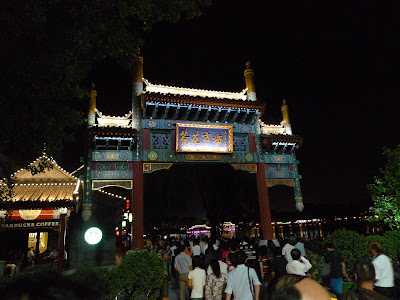
Bars with live bands.
Beijingers are quite an active bunch, and it is very common to see lots of people playing sports, games and dancing on the streets or anywhere they can find a big open space. This is truly one of the great sights of Beijing.
Bars with live bands.
Beijingers are quite an active bunch, and it is very common to see lots of people playing sports, games and dancing on the streets or anywhere they can find a big open space. This is truly one of the great sights of Beijing.
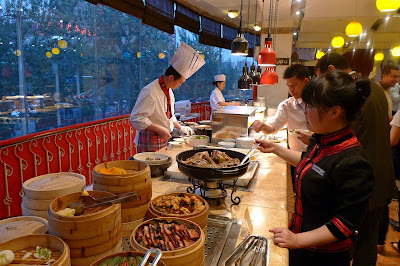
The main dining hall is on the 1st floor of the restautant. The hall has tiered platforms for dining and viewing the show in comfort. The buffet is in the foyer of the dining hall, and there is quite a large spread of choices - from appetizers, salads, grille stations, barbeque stations, hot and cold sections, and dessert. There is also a large selection of hot and cold drinks, beer, and wine - though all the wine are of Chinese origin.
The whole roasted lamb is their specialty - and it is really delicious.
This Mongolian beef - cured beef which is served cold, is also very good.
The wine selection.
What I had.
The main dining hall.
The show commences.
Mongolian ladies in amazing costumes. They may not be authentic, but look fantastic on stage. I can see some influences from Star Wars, or maybe it's the other way round ?
Next time you are in Beijing, be sure to make a trip to Tengelitala. It's a great experience.
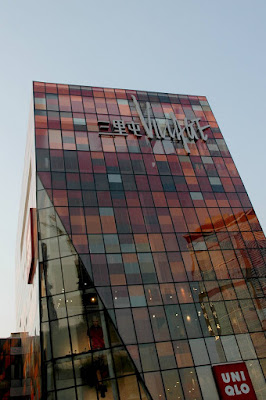
The architectural design and planning is very well done and creates interesting spaces for shoppers to wonder around. The buildings are anchored by a main plaza with water fountains and a huge LED screen on one side of the buildings.
The details of some of the buildings are really interesting, like this facade clad in perforated gold-metallic sheets. It looks like an expensive jewelry box - more expensive then the stuff they sell inside, perhaps ?
This is one of the rare shopping centres you visit for the architectural design rather then the shopping. Make a stop here if you happen to be in Beijing. You won't regret it.
The Opposite House is located in the Sanlitun District, an up-and-coming commercial district towards the North-Eastern side of the Forbidden City. It is a part of the huge Sanlitun Village commercial development.
From the outside, the building looks quite ordinary - a glass box clad in shades of green glass panels arranged in a random pattern. It doesn't prepare you for what happens inside.

The minute you enter the hotel, you know you are going into something very different. A 5-storey atrium creates a very dramatic and stunning entrance statement.
The reception lobby is off to one side, and the reception counter is impossible to find - it is actually a low bench decorated with lots of white candles. The reception staff are dressed in very trendy uniform, looking like fashion models. The wall behind the reception counter is made up of hundreds of small drawers - very much like old Chinese medicine cabinets.
Though we did not make any appointments, the hotel staff were very kind to show us around the property. They even let us into one of the rooms. The room layout is unconventional - one side of it is fully taken up by the bathroom which is separated from the room with a full clear glass partition. This open arrangement makes the room feel really spacious. The floor is finished entirely in untreated timber. The concept probably broke all the conventional rules of hotel design, but the result is stunning !

The corridor design is very minimalist - the only distinguishing feature for the rooms is a recessed light and small metal numbers.

The rest of the hotel are equally beautiful. This is the restaurant at the basement level.
The Japanese Restaurant.
The swimming pool is at one of the lower basements, and is topped with a very unusual light installation. Hundreds of fibre-optic lights hanging from the ceiling created a hypnotic infinity effect with mirror walls on the side.
If you happen to be in Beijing, don't miss this true architectural gem. It will leave you breathless !
"Ma La" basically means "numbing spiciness". The heat comes from dried chili, and the numbing sensation comes from Sichuan pepper - and they use tons of it here ! Sichuan pepper is different from ordinary pepper - it is not as sharp and spicy. However after a while you feel a numbness on you tongue and lips which you either like or dislike. I quite like the sensation, but my friends hated it.
This is the "Ma La Stew with Frogs". Look at the amount of dried chili used ! I am not a big fan of frogs, having been put off it during a trip to Indonesia where it was served on every meal. Here the frogs were quite big - the meat tender, but besides the spiciness there wasn't much other taste.
Simple stirfried french beans.
A fish soup. The soup is flavoured with bean paste and ginger, and quite good. The fish is a bit bland, like most freshwater fish.
This is my favourite dish - deepfried prawns with cucumber and dried chili. It is kind of like a spicy salad.